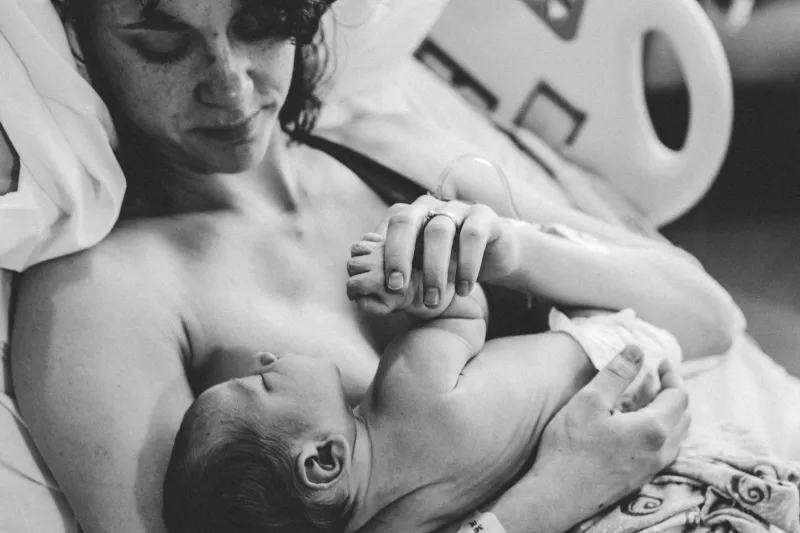
The Moment That Changes Everything
Picture this: you're in those final moments of labour, breathing deeply, feeling grounded and connected to your body's natural rhythm. Your partner's hand is steady in yours, your hypnobirthing techniques flowing naturally as you've practised. But here's something remarkable that's happening beyond what you can see—your baby's brain is being shaped by every calm breath you take, every surge of natural oxytocin flooding your system, every moment of peace you create in that birthing space.
Recent research emerging from UK maternity units is painting an extraordinary picture of just how profoundly a mother's birth experience impacts her baby's neurological development. It turns out that hypnobirthing isn't just about making labour more comfortable for mum—it's actually one of the first and most significant gifts you can give your child's developing mind.
The Chemistry of Connection
Sarah Mitchell, a senior midwife at Birmingham Women's Hospital who's been incorporating hypnobirthing principles into her practice for over a decade, explains it beautifully: "When a mum is calm and centred during birth, her body produces optimal levels of oxytocin—what we call the love hormone. But what many parents don't realise is that this oxytocin doesn't just help with labour progression; it crosses the placenta and bathes the baby's brain in exactly the right chemical environment for healthy neural development."
This isn't just feel-good theory. Emerging UK-based studies are showing measurable differences in the brain activity and stress response patterns of babies born in calm, low-intervention environments compared to those born under high-stress conditions. The implications are profound and far-reaching.
Your Baby's First Lesson in Calm
When you use hypnobirthing techniques during labour—deep breathing, visualisation, positive affirmations—you're not just managing your own experience. You're teaching your baby's nervous system its very first lessons about how to respond to the world. Dr. Emma Thompson, a perinatal psychologist working with NHS trusts across the Midlands, describes it as "neural programming in real-time."
"Think of it this way," she explains. "Your baby has spent nine months in the ultimate safe space—warm, protected, constantly nourished. Their first experience outside the womb becomes a template for how their nervous system learns to respond to new situations. If that first experience is characterised by calm, steady breathing, and a sense of safety, we're essentially programming resilience into their developing brain."
The Science Behind the Serenity
The research is fascinating when you dig into the details. Babies born to mothers who maintained lower cortisol levels during labour (the hallmark of effective hypnobirthing practice) show:
- More organised sleep patterns in their first weeks of life
- Better self-regulation abilities when it comes to feeding and settling
- Lower baseline stress hormone levels
- More efficient neural pathways between different brain regions
But perhaps most remarkably, these babies often demonstrate what researchers are calling "enhanced neuroplasticity"—essentially, their brains appear more adaptable and better equipped to form healthy neural connections as they grow.
Beyond the Birth Room
Midwife Rachel Davies from Cardiff's University Hospital has been documenting these effects in her own practice. "I've been attending births for twenty-three years, and I can honestly say that babies born to mothers who've used hypnobirthing techniques consistently show different patterns of alertness and calm in those crucial first hours after birth."
She describes watching newborns who seem more "present" and connected, babies who latch more easily for their first feed, who settle more readily for skin-to-skin contact, and who seem to transition into the world with less distress. "It's as if they've inherited their mother's calm," she notes.
The Ripple Effect Through Development
What's even more exciting is how these early neural patterns appear to influence development well beyond the newborn period. Longitudinal studies following children born under low-stress conditions are showing promising trends in emotional regulation, social development, and even learning capacity as these children grow.
"We're seeing children who seem more resilient in the face of everyday stresses," explains Dr. Thompson. "They appear to have inherited not just their parents' genetic material, but also their capacity for calm response to challenges."
Creating Your Baby's Optimal Beginning
So what does this mean for you as an expectant parent? It means that every hypnobirthing technique you practise, every moment of calm you cultivate, every deep breath you take during labour isn't just about your comfort—it's about giving your baby the best possible neurological foundation for life.
The beautiful thing about hypnobirthing is that it works with your body's natural design. You're not imposing artificial calm; you're removing the barriers that prevent your natural birthing hormones from doing their job. And in doing so, you're creating the optimal chemical environment for your baby's brain development.
Your Baby's First Gift
As Midwife Mitchell puts it: "When I see a mum using her hypnobirthing tools—breathing deeply, staying present, trusting her body—I know I'm witnessing something profound. She's not just birthing her baby; she's actively shaping that little one's capacity for calm and resilience. It's honestly one of the most beautiful things about our job."
Your baby's brain development doesn't begin at birth—it's happening right now, influenced by every choice you make about how you approach labour. The calm, centred state you cultivate through hypnobirthing becomes your baby's first experience of what it means to feel safe in the world. And that, perhaps, is the most precious gift any parent can give.